What Is The Difference Between Recovery And Towing Checklist (Step-By-Step Guide)
When your vehicle encounters trouble on the road, knowing whether to opt for recovery or towing is crucial. Many drivers confuse these two terms, which can lead to costly mistakes or even safety hazards. This guide will clearly explain what is the difference between recovery and towing checklist (step-by-step guide), helping you make informed decisions while ensuring vehicle safety.
Understanding the nuances between recovery and towing ensures the right equipment, procedures, and legal compliance are followed. Whether your vehicle is stuck off-road or immobilized on a busy street, this guide provides clarity.
Understanding Vehicle Recovery
What Vehicle Recovery Means
Vehicle recovery refers to the process of removing a vehicle from a difficult situation where it cannot move under its own power. Examples include vehicles stuck in mud, snow, sand, or a ditch. Recovery often involves specialized equipment like winches, recovery straps, and heavy-duty vehicles.
Recovery is not just about moving the vehicle—it’s about safely freeing it without causing further damage. This step often requires trained professionals familiar with the terrain and vehicle weight distribution.
Key Steps in Vehicle Recovery
-
Assess the Situation: Check the vehicle’s position, surrounding terrain, and potential hazards.
-
Prepare Recovery Equipment: Gather winches, chains, and safety gear.
-
Secure Vehicle: Attach recovery straps or cables to designated recovery points.
-
Execute Recovery: Slowly and carefully pull the vehicle free, monitoring tension and alignment.
-
Check Vehicle Condition: Inspect for damage and ensure it can move safely afterward.

Vehicle recovery emphasizes safety, technique, and preventing further damage. It is often performed on-site without moving the vehicle to a repair shop.
Understanding Vehicle Towing
What Vehicle Towing Means
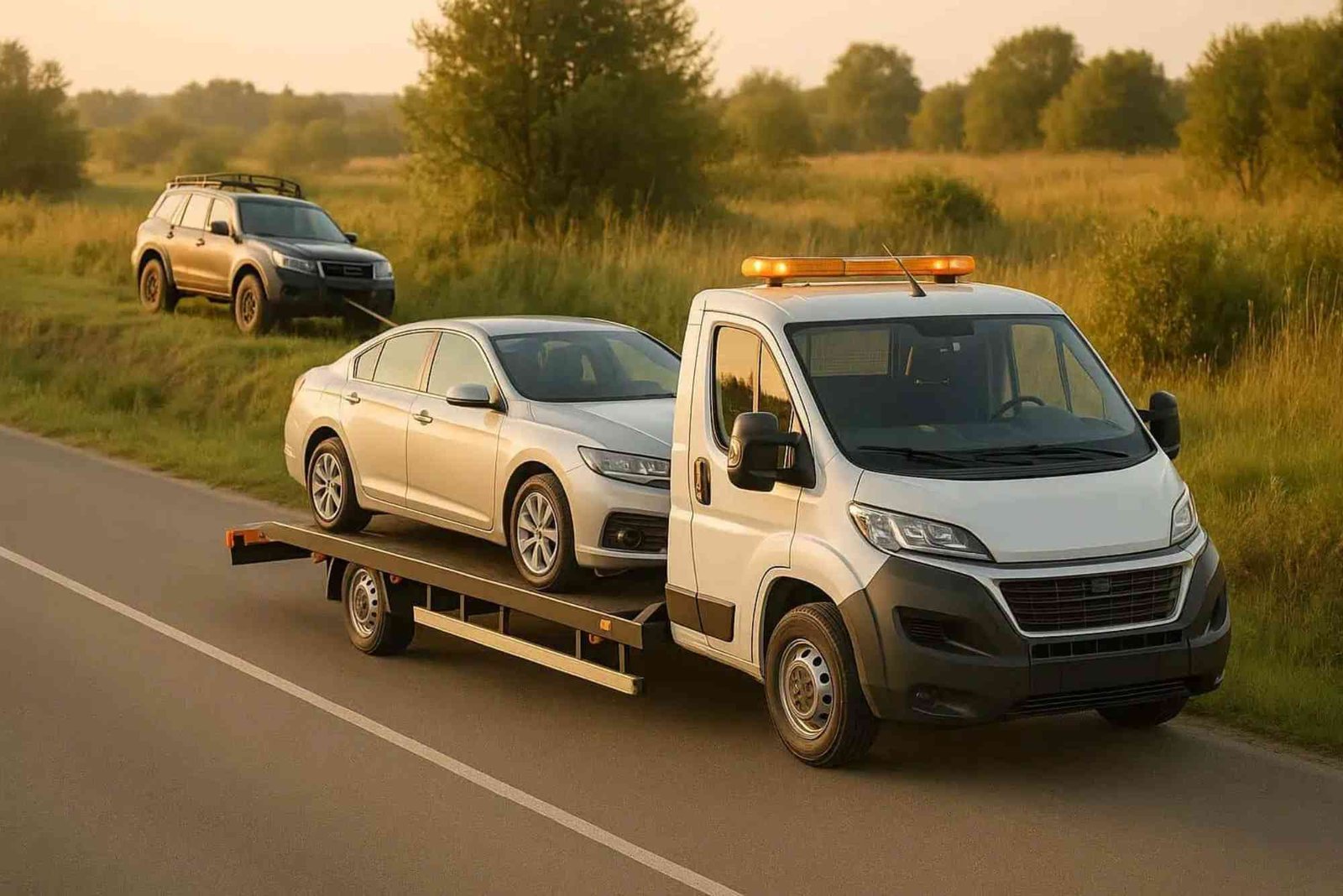
Towing involves transporting a vehicle from one location to another, typically when it cannot operate normally. Towing is used after accidents, breakdowns, or legal impounds. Unlike recovery, towing focuses on relocation rather than freeing a vehicle from a stuck position.
Towing can be done using flatbed trucks, tow dollies, or hook-and-chain methods depending on the vehicle type and distance to be covered.
Key Steps in Vehicle Towing
-
Assess Vehicle Condition: Determine if the vehicle is drivable or requires full towing.
-
Choose Towing Method: Select flatbed, wheel-lift, or dolly towing based on safety and vehicle type.
-
Secure Vehicle: Properly attach straps, chains, or locks to prevent movement during transport.
-
Transport Safely: Drive carefully, adhering to speed limits and road regulations.
-
Deliver Vehicle: Park and secure the vehicle at the destination before detaching towing equipment.
Towing focuses more on transport logistics and safety over long distances rather than extracting a vehicle from difficult terrain.
Step-By-Step Checklist: Recovery vs Towing
Evaluate the Situation
Determine if your vehicle is stuck or simply broken down. official maintenance guidance Recovery is required for off-road or immobilized situations. Towing is required for standard breakdowns or post-accident transport.
Select Appropriate Equipment
Recovery requires winches, straps, and anchor points. Towing requires trucks, dollies, or flatbeds depending on vehicle size.
Safety Precautions
Always wear gloves and high-visibility vests during recovery or towing. Ensure bystanders are at a safe distance. Check for traffic hazards and uneven terrain.
Vehicle Connection
Recovery focuses on attaching cables to recovery points. Towing requires secure placement on a tow truck or dolly with locked wheels.
Execute the Move
Recovery involves slow pulling with tension monitoring. Towing involves safe transport over roads with careful braking and turning.
Post-Move Inspection
Check for damage, fluid leaks, or mechanical issues after recovery or towing. automobile basics Follow official maintenance guidance for repairs or preventive checks.
Common Mistakes to Avoid
Using Incorrect Equipment
Using a towing method for recovery can damage the vehicle’s suspension or chassis. Recovery straps are different from towing chains.
Ignoring Safety Precautions
Neglecting personal safety or failing to secure the area can result in accidents. Always maintain distance from tensioned cables or moving vehicles.
Not Assessing Vehicle Condition
Transporting a damaged vehicle improperly may worsen mechanical issues. Always inspect and choose the method based on vehicle condition.
Tips for Safe Recovery and Towing
-
Always read your vehicle’s manual for recommended recovery points.
-
Use equipment rated for your vehicle’s weight.
-
Avoid sudden jerks when pulling a stuck vehicle.
-
Drive slowly and smoothly when towing to prevent swaying.
-
Keep a checklist of recovery and towing essentials in your vehicle.
By understanding what is the difference between recovery and towing checklist (step-by-step guide), drivers can confidently handle emergencies without risking further damage. For more detailed insights, you can learn more about what is the difference between recovery and towing.
Internal Knowledge References
For beginners, reading about automobile basics can provide a stronger understanding of vehicle systems and recovery points. Following official maintenance guidance ensures safety and preserves vehicle longevity.
Knowing the difference between recovery and towing is essential for vehicle safety. Recovery focuses on freeing immobilized vehicles, while towing emphasizes safe transport to another location. By following the step-by-step checklist and safety tips, you ensure efficient, damage-free operations.
Always carry the right equipment, understand your vehicle’s needs, and follow proper procedures. Being prepared can save time, money, and stress on the road. For safe practices and vehicle handling, learn more about what is the difference between recovery and towing and explore automobile basics to strengthen your knowledge.
Take action today by preparing your recovery and towing checklist and ensure you are ready for any road situation.
Aboutroyal.com is your go-to destination for luxury lifestyle insights, trending fashion, and premium products. From the latest in style to exclusive reviews, Aboutroyal.com keeps you informed and inspired. Discover elegance, sophistication, and curated content that elevates your everyday choices, all in one place.
FAQ
What is the main difference between recovery and towing?
Recovery involves freeing a stuck vehicle, while towing focuses on transporting a vehicle to a different location.
Can I tow a vehicle stuck in mud?
It is possible, but a proper recovery procedure is safer and reduces the risk of damage.
What equipment is needed for recovery?
Winches, recovery straps, gloves, and anchor points are essential for vehicle recovery.
Is towing dangerous for the vehicle?
Towing can be safe if the correct method and equipment are used, including flatbeds or dollies.
Should I follow the vehicle’s manual during recovery?
Yes, always refer to official maintenance guidance for proper recovery and towing points.
How can I prevent vehicle damage during towing?
Ensure the vehicle is properly secured, choose the correct towing method, and drive carefully.
Related Reading: Nabla Beyond Jelly Lipstick Swatches Checklist (Step-By-Step Guide)